

What Is The Probability Of Drawing Two Cards Showing Odd Numbers
A probability experiment is something that has an uncertain result. In the context of probability, this is often but referred to every bit an experiment.
An experiment could be rolling a off-white 6-sided dice, or flipping a fair coin. In either case, the result is random, and we cannot predict what information technology will be. In the field of science, we often think of "experiments" as things that we control in a lab. All the same, in probability theory, an experiment need non be something that nosotros command. For instance, a probability experiment could be the weather tomorrow.
Fifty-fifty though it's not possible to know what the result of an experiment will be, it can be very helpful to analyze and understand what could possibly happen. Something that could possibly happen is chosen an upshot.
An upshot is a possible result of an experiment.
A possible outcome of rolling a fair 6-sided die is . A possible outcome of flipping a fair coin is "heads." Both of these experiments accept relatively few possible outcomes, and and so it is like shooting fish in a barrel to recall of all the possible outcomes. However, there are some experiments with relatively massive amounts of potential outcomes. Think of a lottery equally a probability experiment. At that place are millions of potential winners in a lottery, and and so there are millions of potential outcomes of the experiment. It would be very difficult to consider every possible winner of the lottery individually.
The set of all outcomes in an experiment is called the sample space of that experiment.
The sample infinite of rolling a fair 6-sided die is . The sample infinite of flipping a fair coin is . The sample infinite of a lottery would be too large to listing out here.
Ii fair six-sided dice are rolled, and the rolls are added together. What is the sample infinite of this probability experiment?
In probability theory, we often grouping outcomes together in order to make analyzing the sample space more than meaningful. Equally it was mentioned earlier, it would exist incommunicable to listing the sample space of a lottery with millions of participants. However, nosotros could take a word about certain parts of that sample space. For example, the potential winners who are from a certain city, or the potential winners who are women over the age of 65. These "parts" of the sample space are called events.
An consequence is a subset of the sample space.
We could define . In this case, , which is a subset of the sample space, .
A fair 20-sided dice, numbered 1 through 20, is rolled.
Let exist the consequence that a prime is rolled.
In the sample space of a fair coin flip, each outcome, "heads" or "tails," is just equally probable as the other. Likewise, in the sample space of fair 6-sided dice rolls, each roll is only as likely as the other. These sample spaces are called uniform.
A sample space is uniform if all outcomes are every bit likely.
A fair lottery in which each participant has exactly ane ticket Drawing a bill of fare from a shuffled poker deck Rolling a off-white six-sided die The price of an ounce of gilded tomorrow
Which of the post-obit probability experiments would not take a uniform sample infinite? 
If the sample space of a given experiment is known to be compatible, so the probability of an event can be found with the sizes of the event and the sample space:
Suppose there is an experiment with sample space , and is an event in that sample space. If the experiment is performed many times, so the probability of is the expected proportion of times that any outcome in volition happen.
The probability of is denoted past .
If is uniform (all outcomes in are every bit likely), then the probability of is the size of divided by the size of :
A deck of 10 cards labeled with numbers 1 through 10 is shuffled, and a carte is drawn. What is the probability an even-numbered card is drawn?
The sample space of this experiment is , and .
Let be the outcome of drawing an even-numbered carte du jour. Then , and .
All of the outcomes in this experiment are equally likely, so nosotros can use the above formula:
.
The probability of drawing an even-numbered card is .
A number is selected at random from the kickoff thirty natural numbers. What is the probability that it is a multiple of EITHER or ? 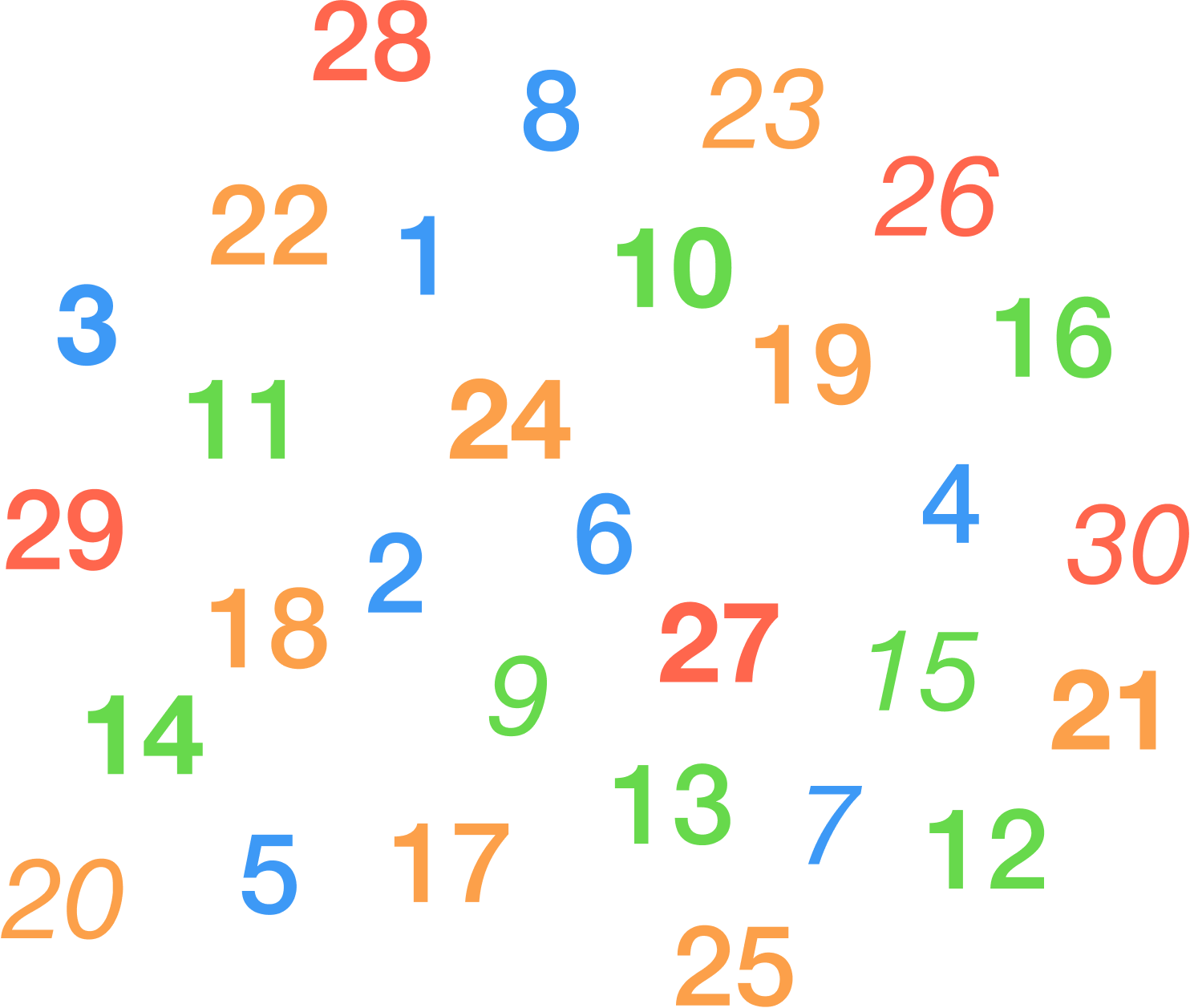
A die is rolled and a money is tossed. Discover the probability that the die shows an odd number and the coin shows a head.
First, determine the sample space, or all of the possible outcomes of the problem. The sample space Due south of the experiment is as follows:
Let be the event "the die shows an odd number and the coin shows a head." Then event consists of the following outcomes: Thus, the probability equals
A grouping of friends is playing a board game.

It is Mike'south turn, and he is well-nigh at the end. Mike will scroll a off-white six-sided die to make up one's mind how many spaces he moves, so he will flip a coin to determine if he goes forwards or backwards.
Mike needs to movement forward at least 4 spaces to win. What is the probability that Mike wins the game on this turn?
Image Credit: Gadini
The examples given thus far have had relatively small sample spaces. For small sample spaces, it'south a simple exercise to listing out all possible outcomes, and then count the size of the sample infinite and the events in it. However, it is common for sample spaces to exist too big to listing exhaustively. The binomial coefficient can often be used to count the sizes of large sample spaces and events without having to list out outcomes.
Problems involving a standard playing card deck typically use binomial coefficients to notice the size of sample spaces and events.
A standard playing card deck, as well called a poker deck, contains 52 singled-out cards.
These cards are divided into four suits:
Hearts and Diamonds are the two cherry suits. These are sometimes abbreviated as H and D.

Clubs and Spades are the two black suits. These are sometimes abbreviated as C and Due south.

There are thirteen ranks in each conform: An Ace, nine cards numbered through , and three face up cards: the Jack, the Queen, and the Rex.

The face cards are abbreviated as J, Q, and K. The Ace is abbreviated as A.
Paradigm Credit: Final-Dino
Paradigm Credit: Trainler
When counting possible outcomes using the binomial coefficient or other means, it's important to employ the rule of sum and rule of product counting principles.
A histrion is dealt v cards from a shuffled poker deck. What is the probability of getting 4 aces amidst those cards?
The sample space consists of all five card hands that can be fatigued from 52 cards, without regard to gild. This sample infinite has outcomes in it.
Let be the event consisting of all hands with four aces. How many outcomes are in ? If four of the cards in the five-card hand are aces, the 5th carte tin can be any of the remaining 48 cards. Therefore (without regard to lodge) has 48 outcomes in it. Therefore,
This is approximately 0.0000185. (Very small, as we would expect.)
Two cards are fatigued from a shuffled standard playing menu deck. What is the probability the cards are the same arrange?
We will solve this question in the following two means:
Solution i. At that place are means to choose 2 cards from the deck. In that location are means to choose two cards that are both hearts. There are the same number of ways to choose 2 cards that are both diamonds, clubs, or spades. And so the probability is
Solution 2. The commencement carte du jour can exist anything. No affair what information technology is, there are 12 cards that are the same accommodate with 51 total cards remaining. And so, the probability the two cards have the aforementioned conform is
In the game of poker, a total firm is a special kind of 5-card hand. It consists of three cards of the aforementioned rank and some other 2 cards of the same rank.

If a actor is dealt 5 cards from a shuffled 52-card poker deck, what is the probability of getting a total firm? Circular the respond to 6 decimal places.
The principles learned from playing card bug tin can exist applied to other problems.
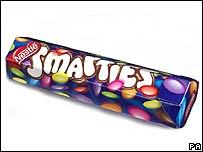
A little box contains twoscore smarties: 16 yellow, xiv ruby-red and ten orange.
You draw iii smarties at random (without replacement) from the box.
What is the probabilty that you become 2 smarties of i color and another smartie of a different color?
Express your reply every bit a percentage rounded to the nearest whole pct.

Source: https://brilliant.org/wiki/uniform-probability/
Posted by: hicksbuntind.blogspot.com
0 Response to "What Is The Probability Of Drawing Two Cards Showing Odd Numbers"
Post a Comment